Notes · 29 September 2026
Test who can update a disclosure portal before handover
A publishing rehearsal can reveal who has the authority and support to keep a public record current.
Before you accept a disclosure portal at handover, ask the team expected to run it to rehearse one update.
Use a test copy of a project record and a clearly labelled change, such as a revised completion date. Keep the rehearsal out of the public record. Ask the intended publishing team to take the change through the approval and publication steps they expect to use.
Follow the change from its source. Can the responsible person obtain the revised date and the document that supports it? Who checks that the record matches the source? Does that person have authority to approve publication? Can the publisher then update the test record using the agreed account and support arrangement?
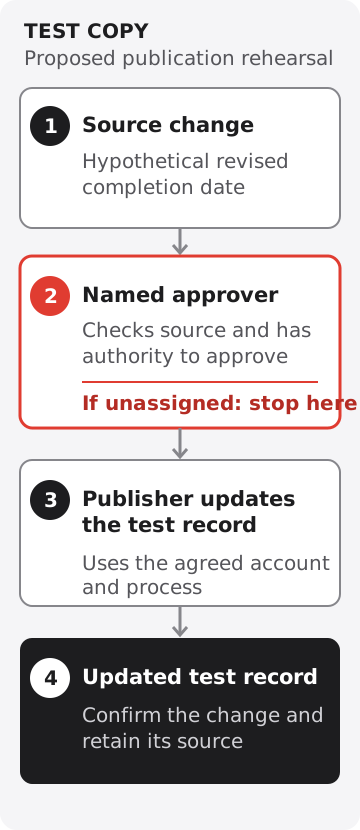
Source: OC4IDS publishing guidance, steps 3 and 4. The rehearsal described here is a recommendation, not a prescribed acceptance test.
These questions separate software capability from an institution's ability to operate the process. A supplier demonstration can show that the software accepts a change. A rehearsal asks whether the people who will maintain the information can find, check, approve and publish it. If the process stops, record where and what must be agreed. A missing permission, unclear approval or support task without an owner is useful to discover while scope and responsibilities can still be discussed.
Public infrastructure data publishing guidance calls for systems and business processes that keep data current, with updates throughout a project's life. That guidance supports the importance of an operating process. It does not prescribe this rehearsal as an acceptance test. The rehearsal is a practical recommendation for commissioning teams to consider.
An automated feed still needs someone to handle an exception, such as a rejected update or a correction to its source. Moving information does not settle who may approve a change or who resolves a problem. Include those responsibilities in the rehearsal even when no one enters the record by hand.
One successful rehearsal has a narrow meaning: the intended team completed the process under the conditions tested. It cannot show that the portal will stay current after handover. Continued publication over time is the evidence of continued operation.